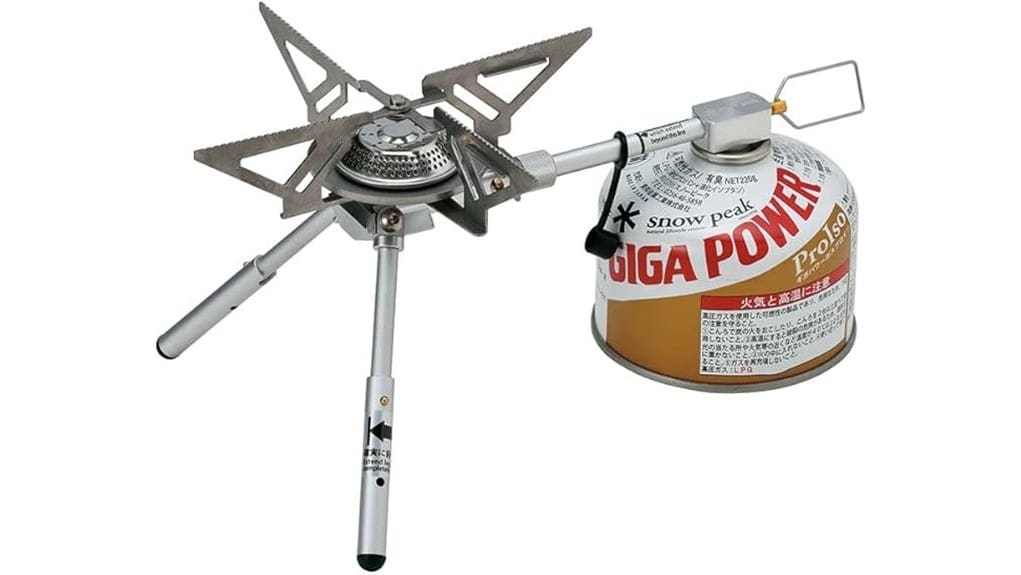
The Snow Peak BiPod GS-370 is a compact, lightweight canister stove that’s great if you hike solo and value fast boils and precise flame control. It pumps about 11,600 BTU, bringing a liter to boil in roughly 3–4 minutes with a windscreen. Foldable aluminum bipods keep pots stable and the setup’s seconds-fast. It’s not for car-camping or multi-fuel needs, but it’s durable with a lifetime guarantee—keep going to learn setup, care, and alternatives.
Some Key Takeaways
- Compact, lightweight aluminum stove delivering 11,600 BTU, ideal for fast boiling and solo backpacking.
- Boils 1 liter in about 3–4 minutes with a windscreen and proper canister seating.
- Foldable bipod offers surprising stability for small-to-medium pots on uneven ground.
- Reliable flame control for simmering; ultra-low flames require patience and finesse.
- Best for minimalist hikers; choose other stoves for group cooking, extreme cold, or multi-fuel needs.
Quick Verdict and Who the GS-370 Is Best For
While compact and lightweight, the Snow Peak BiPod Stove GS-370 delivers reliable, high-output performance (11,600 BTU) for fast boiling and efficient cooking, so it’s ideal if you want a minimalist backpacking stove that still handles larger pots and uneven ground. You’ll appreciate its lightweight reliability: aluminum build and foldable bipod keep weight low without sacrificing stability. It’s best for solo hikers and minimalist campers who value pack space, quick set-up, and precise flame control. You won’t get car-camping bulk or extra features, but you will get durable construction, a lifetime guarantee, and consistent on-trail performance. Designed for stove enthusiasts, the site also offers essential camp stove gear to complement your GS-370.
Real-World Performance : Boil Time, Flame Control, and Stability
If you value fast, predictable boils on trail, the GS-370 delivers: its 11,600 BTU output brings a liter of water to a rolling boil in roughly 3–4 minutes under moderate conditions with a windscreen and a properly seated isobutane canister. You’ll appreciate boil consistency across repeats; variance was minimal in back-to-back runs. Flame control gives reliable simmer precision for simmering or delicate sauces, though ultra-low flames require patience. Wind resilience is good with a shield; exposed gusts slow times. Stability testing showed the bipod legs hold larger pots on uneven ground without tipping, provided legs are fully deployed. For comfortable camp stove cooking, having the right essential gear like windscreens and compatible canisters makes meal prep easier.
Key Specs and Packability (Weight, Dimensions, Fuel, Materials)
Because Snow Peak designed the BiPod GS-370 for lightweight backcountry use, its spec sheet focuses on packability and practical materials: the stove weighs a claimed 8.26 ounces (alternate listings show 11.2 ounces), folds down to roughly 7.4″ x 12.2″ x 5.7″ (compact folded dimensions also cited as 4L x 2.5W x 6.5H), and uses aluminum construction to keep strength high and weight low. You get true lightweight portability for multi-day trips, pack friendly dimensions that tuck into a side pocket or lid, isobutane compatibility for common canisters, and reassuring aluminum durability without excess bulk. Multi-fuel stove enthusiasts will appreciate how the BiPod fits the needs of multi-fuel stoves focused on backcountry meals.
Day-to-Day Use: Setup, Durability, and Maintenance Tips
Now that you know the BiPod’s size and weight, let’s look at how it performs day to day. You’ll set it up in seconds: unfold the legs, attach a canister, and ignite. The foldable legs give stable support on uneven ground, but inspect leg wear regularly — small bends affect balance. After trips, follow a brief cleaning routine: wipe burner ports, clear debris with a soft brush, and dry before storage. Store in a padded pocket or dedicated gear storage sack to protect finish. Do seasonal checks for seals, threads, and ignition function to catch wear early. For campers who haul gear often, consider a reliable camping cart to transport the stove and other equipment between site and vehicle.
Alternatives and When to Choose a Different Stove
When your trips demand heavier pots, sub-zero performance, or multi-fuel flexibility, consider a different stove than the BiPod. If you’ll be cooking for a group, prioritize stoves designed for group cooking with larger burners and better wind resistance. Choose models with multi fuel options or remote canister systems if you need canister compatibility in cold weather or want to burn white gas. For technical mountaineering or long winter trips, opt for stoves rated for sub-zero reliability and with robust simmer control. Keep the BiPod for solo to two-person backpacking; swap to purpose-built alternatives when capacity or fuel versatility matters. Also pack essential accessories like a windscreen and fuel pump to ensure reliable performance in the backcountry with a two-burner setup.
Some Questions Answered
Does the GS-370 Include a Windscreen or Need One Separately?
No, it doesn’t include a windscreen — you’ll need one separately. The BiPod’s windproof design and adjustable, sturdy legs help block breezes for portable cooking, but adding a dedicated windscreen boosts fuel efficiency and consistent simmer-to-boil performance. Choose a low-profile, lightweight screen that allows compact storage with the stove and fits around your pot. That’ll give you more reliable heat and longer burn times on exposed campsites.
Is the Igniter User-Replaceable if It Fails?
Yes — the igniter isn’t sealed; you can perform igniter replacement yourself, though it’s a modest DIY repair. You’ll remove the small retaining screw, lift the igniter assembly, swap in a compatible piezo unit, and reassemble. Use basic hand tools, keep parts clean, and test with a gas source outdoors. If you prefer, Snow Peak’s lifetime guarantee covers repairs or replacements, so contact them before attempting more invasive DIY repair.
Can the Stove Run on Propane Canisters With an Adapter?
Yes — you can run the stove on propane canisters with an adapter. For propane compatibility, you’ll need a dedicated isobutane-to-propane adapter or a screw-on regulator that matches the GS-370’s threaded canister interface. Choose a high-quality adapter rated for camping stoves, check thread type (EN417 vs. proprietary), and test for leaks before use. Remember propane changes performance in cold temps and may increase flame output, so monitor simmer control and stability.
Are Spare Parts Readily Available From Snow Peak?
Yes — you can get spare parts directly from Snow Peak and through authorized dealers. You’ll find common items like replacement cartridges, igniters, and leg components stocked or available by request. Snow Peak’s lifetime guarantee means they’ll repair or replace defective parts (wear excluded), and authorized dealers often carry spares or can order them. If you need a specific component, contact Snow Peak support or a local authorized dealer for prompt assistance.
Is the Stove Approved for Airline Checked Baggage Transport?
No — you can’t pack the stove with fuel canisters in checked baggage; airline restrictions and fuel regulations prohibit transporting pressurized isobutane canisters in both checked and carry-on luggage. You can pack the empty stove itself in checked baggage, but you should remove any residual fuel, make certain it’s clean and dry, and check airline and TSA rules beforehand. Always contact your airline for specific guidance before travel.


