The Trangia Micro Original is a tiny, no-frills alcohol stove that’s built for solo outings when every gram and cubic inch matter. You’ll get a 0.5 L T-cup, windshield, foldable handle and spirit burner that nest tight for ultralight packing. It boils reliably in calm conditions but offers limited flame control, slower fuel economy, and isn’t made for group cooking or precise simmering. If you want simple, dependable solo meals, keep reading to see how it performs in practice.
Some Key Takeaways
- Ultra-compact alcohol stove kit ideal for solo hikers, offering strong nesting efficiency and a 0.5 L T-cup with lid and windshield.
- Weighs 0.31 kg and stores in small pack pockets, prioritizing minimal grams over cooking versatility.
- Boils 0.5 L in roughly 6–9 minutes in calm conditions; slower in wind and cold despite the windshield.
- Basic flame control suits quick boiling and simple meals, but not precise simmering or group cooking.
- Best for ultralight, no-fuss trips; consider canister or multi-fuel alternatives for faster or more versatile cooking.
Quick Verdict: Is the Trangia Micro Original Right for Solo Camping?
If you want a tiny, no-frills stove that’s built for quick solo meals, the Trangia Micro Original fits the bill. You’ll appreciate its minimal weight and compact footprint, though weight distribution is concentrated low and central — great for stability but limited when pairing larger cookware. It’s ideal if you want fast boiling and simple recipes, not gourmet multitasking. Flame control is basic: you get on/off simplicity with limited modulation, so cook with patience and practice. You’ll like its reliability and tiny pack size, but don’t expect precise simmering or versatility for group cooking. For ultralight hikers focused on minimal gear, consider how the Trangia Micro compares to other backpacking stoves when prioritizing weight and simplicity.
What’s in the Kit and How It Packs Down
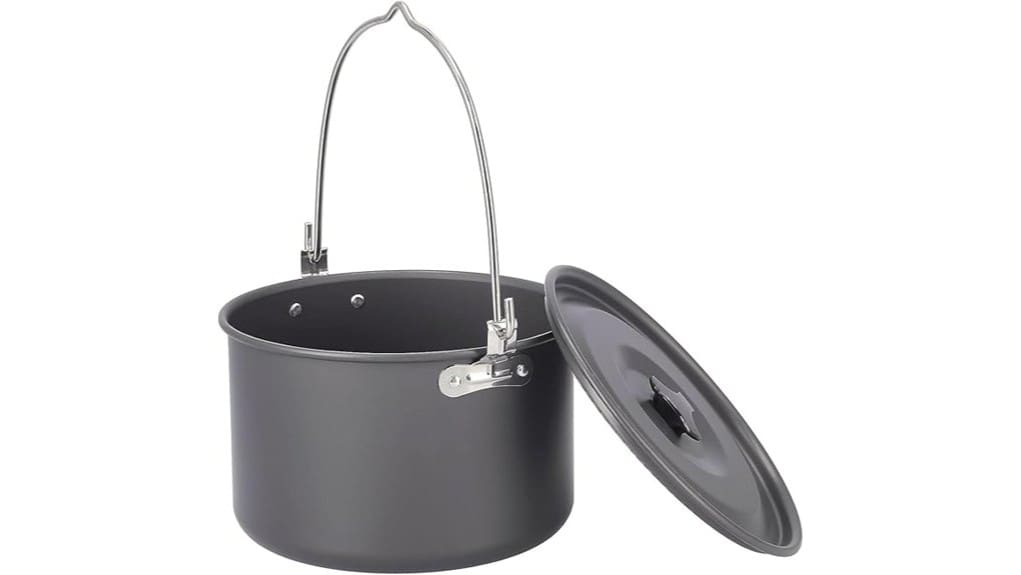
You’ll notice the Micro’s simplicity carries over into what’s in the kit and how it packs down. You get a T-cup with lid, foldable handle, windshield and spirit burner — all designed to nest inside the cup. Nesting efficiency is strong: parts seat snugly, the handle snaps over the lid, and the windshield tucks flat. In packability testing it proved compact and stable in a small pack pocket, though the plastic handle must be kept clear of heat. Critically, it’s minimal by design — excellent for ultralight setups but limited if you want extra cookware. Aluminum camping tables are a common companion for ultralight setups due to their lightweight durability.
Key Specs That Matter: Capacity, Weight, Dimensions, and Fuel
Because space and fuel define how you use the Micro, its specs matter: the 0.5 L capacity and 0.31 kg weight make it strictly a solo lunch stove, while the compact 3.3 x 3.3 x 4.4 dimensions mean it tucks into a small pack pocket without fuss. You’ll appreciate the clear capacity details—0.5 L with level markings—so you won’t overfill. Weight comparison vs larger cooksets highlights its sacrifice: you trade cooking versatility for minimal grams. Fuel is alcohol (spirit) burner only, so plan for slower, lower-heat cooking and carry appropriate fuel bottles. Practical, minimalist by design. Many campers pair it with compact fire starters for quick, reliable ignition on solo trips.
Real-World Performance: Cooking, Boil Time, and Fuel Use
When pressed into service, the Micro performs exactly as its specs suggest: it’s quick enough for a solo lunch but won’t replace a full cookset for multi-course meals. You get reliable boil times for 0.5 L in calm conditions—roughly 6–9 minutes depending on wind and how full the pan is. Fuel consumption is modest for short boils, but alcohol burns faster than canister gas if you’re simmering or cooking multiple items. You’ll manage simple stews and rehydration well, yet you must account for longer heat-up under wind and colder temps; pack extra fuel and accept the limits. As a lightweight option popular with solo hikers, its compatibility with other multi-fuel stoves and compact design make it a common choice for minimalist packs.
Who Should Buy It (Use Cases, Pros, Cons, and Alternatives)
After seeing how the Micro handles quick boils and light meals, think about who actually benefits from it: solo hikers, ultralight campers, and anyone who needs a compact, no-fuss lunch stove. You’ll love its tiny footprint and easy nesting, perfect when weight matters and simplicity rules. Pros: ultra-portable, low maintenance, reliable alcohol burn. Cons: limited capacity (0.5L), slower in wind despite the windshield, not ideal for groups. Use cases: day hikes, bikepacking, minimalist trips. Alternatives: canister stoves for faster heat, multi-fuel systems for versatility. Respect camping etiquette and practice lightweight maintenance. Keep devices charged on trips with camping battery chargers to stay connected and powered.
Some Questions Answered
Is the T-Cup Dishwasher-Safe?
No, the T-cup isn’t recommended for the dishwasher. You’ll want to take into account materials compatibility: the aluminum and any markings can discolor or wear in a dishwasher. For cleaning tips, wash it by hand with warm soapy water, avoid abrasive pads, and dry thoroughly to prevent oxidation. If you notice residue, soak briefly rather than scrubbing hard. Keep the plastic handle away from direct heat and avoid harsh detergents.
Can I Use Denatured Alcohol or Methanol?
Yes — you can use denatured alcohol or methanol, but be cautious. You’ll get acceptable fuel compatibility, yet burn efficiency and safety vary: denatured alcohol burns cleaner and slightly hotter, methanol can be more volatile and produce soot. Always use the spirit burner as intended, avoid additives, and monitor flame size. Keep the plastic handle away from direct heat, use level markings for proper fuel amount, and follow safety precautions.
Are Spare Parts Available From Trangia?
Yes — spare availability is good; Trangia sells replacement parts and you can source them. You’ll find burners, lids, windshields and handles through Trangia’s official site, authorized dealers, and reputable outdoor retailers. For parts sourcing, check product model 100500 and warranty terms; keep receipts for claims. Be critical about third‑party parts quality and compatibility, and contact Trangia support if you’re unsure which genuine component you need.
Does It Fit Inside Standard Backpack Side Pockets?
Yes — you’ll likely fit it into many standard backpack side pockets. Its compact dimensions and nested T-Cup design aid backpack compatibility, but pocket sizing varies widely. At roughly 3.3 x 3.3 x 4.4 (small and cylindrical), it should slide into deeper, elastic side pockets; shallow or narrow pockets might not close or could strain seams. Measure your pockets against the stove to be sure.
Is the Windshield Usable as a Plate or Bowl?
No — the windshield isn’t ideal as a plate or bowl. You can use it as improvised cookware in a pinch, but it’s meant for wind protection and lacks deep sides and a food-safe finish for regular eating. You’ll get better results using the T-Cup, which nests with the windshield for compact, nested storage. Be critical: treat the windshield as a sheltering component, not primary cookware.